Best Wedding Photo Culling Company Australia: How to Choose the Right Partner
Wedding photography is about capturing once-in-a-lifetime moments. However, the work does not end when the wedding day is over. Thousands of photographs may still need to be reviewed, selected, organised and prepared before a gallery can reach the client.
For busy wedding photographers, this post-production workload can become one of the biggest obstacles to growing a photography business.
Outsourcing to a professional wedding photo culling company can help reduce repetitive work, improve workflow efficiency and create more time for shooting, marketing and client communication.
But how do you find the best wedding photo culling company in Australia? The answer is not simply choosing the cheapest service or the provider advertising the fastest delivery. You need a partner who understands wedding storytelling, maintains consistent selection standards and respects your creative decisions.
This guide explains what to look for before choosing a wedding photo culling service.
What Is Wedding Photo Culling?
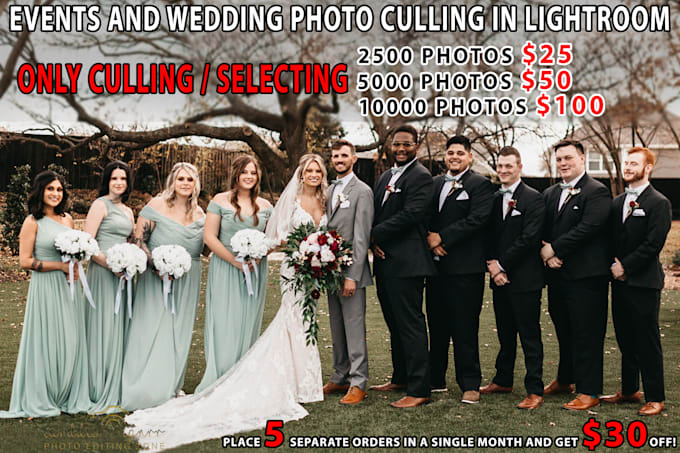
Wedding photo culling is the process of reviewing photographs from a wedding and selecting the strongest images for final editing and delivery.
A photographer might capture several similar photographs of the same moment. Culling helps identify the best frame while removing unnecessary duplicates, technically poor images and photographs that do not contribute meaningfully to the final story.
A professional culling workflow generally considers:
Sharpness and subject focus.
Closed eyes and distracting expressions.
Duplicate and near-identical frames.
Composition and camera positioning.
Important emotional moments.
Group photographs and guest expressions.
Consistency throughout the wedding story.
The goal is not simply to reduce the number of photographs. It is to create a carefully selected collection that communicates the atmosphere and important moments of the wedding.
Culling is different from photo editing. Culling determines which photographs should be retained, while editing adjusts elements such as exposure, colour, contrast, white balance and cropping.
Why Australian Wedding Photographers Outsource Photo Culling
Running a wedding photography business involves much more than taking photographs. Photographers also manage enquiries, consultations, bookings, contracts, shooting schedules, marketing and client delivery.
After a busy wedding weekend, reviewing thousands of photographs can create a substantial post-production backlog.
Outsourcing culling can help in several ways.
1. Reduce repetitive post-production work
Instead of reviewing every photograph personally, photographers can delegate the initial selection process to an experienced editing partner.
This allows them to concentrate on final editing and creative decisions rather than spending excessive time identifying duplicates and obvious technical problems.
2. Improve workflow efficiency
A dependable outsourcing arrangement can make post-production more predictable.
Photographers can establish submission procedures, selection instructions and delivery expectations before sending their projects.
The key is consistency. A provider should understand your preferences and follow the same agreed selection standards across different weddings.
3. Handle seasonal workloads
Australian wedding photographers may experience periods when multiple weddings generate large post-production workloads.
An external culling partner can provide additional workflow capacity without requiring the photographer to manage every selection task alone.
However, outsourcing should be planned around actual provider capacity, especially during busy wedding seasons.
4. Spend more time growing the business
Time saved on repetitive selection work can be redirected towards marketing, networking, album consultations, client communication and new bookings.
Outsourcing does not automatically create business growth, but it can remove one operational bottleneck that limits how much work a photographer can manage.
How to Choose the Best Wedding Photo Culling Company in Australia
Choosing a provider requires more than comparing prices. The following criteria can help you make a more informed decision.
1. Look for wedding photography experience
Wedding photography requires an understanding of moments that cannot be recreated.
A photograph may contain imperfect technical details but still capture an important emotional expression. Similarly, a technically sharp photograph may add little value if it duplicates a stronger frame.
Your culling partner should understand the importance of:
Ceremony entrances and important rituals.
Family and group portraits.
Emotional reactions.
Speeches and celebrations.
Candid guest interactions.
First dances and reception highlights.
Ask whether the provider has experience with wedding galleries rather than relying only on general photo selection experience.
2. Evaluate selection accuracy
Selection accuracy is one of the most important factors when comparing wedding photo culling services.
A good culling result should remove unnecessary images without eliminating meaningful moments.
For example, imagine a sequence containing ten photographs of a couple exchanging rings. The strongest selection should preserve the most expressive and visually useful frames while avoiding unnecessary repetition.
Ask potential providers how they handle:
Similar photographs.
Difficult lighting conditions.
Group photographs.
Important emotional moments.
Expressions and eye contact.
Intentional creative compositions.
Always review a sample before committing to a large project.
3. Check Lightroom compatibility
Many professional photographers use Adobe Lightroom Classic as part of their post-production workflow.
A culling provider should explain how photographs are returned and how selections are identified.
Adobe Lightroom Classic supports flags, star ratings and colour labels to organise and filter photographs. These tools can make it easier to review selected images and rejected frames.
For example, a photographer might use Pick flags for selected photographs and Rejected flags for images that should be excluded.
Official documentation: https://helpx.adobe.com/lightroom-classic/desktop/organize-photos-in-lightroom-classic/flag-label-rate-photos.html
Before ordering, confirm:
Whether the provider works with Lightroom.
Whether Smart Previews are accepted.
How selected and rejected images are marked.
Whether the original folder structure is preserved.
How the completed project is returned.
Do not assume every provider uses the same workflow.
4. Compare turnaround time realistically
Fast delivery can be valuable when clients are waiting for their wedding photographs.
However, a short advertised turnaround is not useful if the provider cannot consistently meet deadlines.
Ask for clear information about:
Standard turnaround.
Rush delivery availability.
Weekend and holiday processing.
Peak-season capacity.
When the delivery clock begins.
What happens if a deadline is missed.
A provider quoting two days and another quoting five days may not be directly comparable if their services, workload and quality-control procedures differ.
Choose a realistic turnaround that fits your client delivery commitments.
5. Evaluate pricing and overall value
Australian culling providers use different pricing structures.
Some charge per photograph reviewed, while others use project-based pricing or combine culling with editing.
For example, RAW Digital Lab publishes tiered pricing, while Plus Minus Collective provides per-image culling pricing. Kasane Edits also publishes separate culling and editing rates.
Compare their current published terms rather than assuming all providers charge the same way.
When calculating your actual cost, consider:
Total photographs submitted.
Whether rejected images are included in the pricing.
Whether editing is included.
Additional charges for rush jobs.
Revision policies.
Currency and applicable GST.
Payment and minimum-order requirements.
The cheapest provider is not necessarily the most economical. A poor selection can create additional review work and undermine the time savings you wanted from outsourcing.
6. Understand human and AI-assisted culling
AI-assisted culling has become another option for photographers.
Adobe Lightroom provides Assisted Culling capabilities that can identify potential issues such as subject focus and closed eyes, helping photographers organise large collections more efficiently.
However, automated selection should not be confused with complete understanding of a wedding's narrative.
A photograph may be technically imperfect yet capture a meaningful family interaction. An automated system may not fully understand why that frame matters.
Human review can provide additional contextual judgement, particularly for emotional moments, cultural traditions and complex group photographs.
The most suitable workflow depends on your priorities, budget and preferred level of creative control.
7. Protect client photographs and personal information
Wedding galleries contain private photographs of couples, family members and guests.
Before sharing files with an outsourcing provider, understand how the company handles your data.
Ask about:
Secure file-transfer methods.
Who can access submitted photographs.
Storage and retention policies.
Deletion procedures.
Confidentiality agreements.
Third-party software and cloud storage.
Whether images can be used in portfolios or marketing.
Do not assume that uploading photographs to a file-sharing platform automatically makes the entire process secure.
Your contract with the provider should explain how photographs are handled and whether permission is required before any image can be published.
Australian Wedding Photo Culling Companies Worth Researching
If you are comparing providers, start by investigating their actual services, pricing and workflows.
Kasane Edits: An Australian-based boutique wedding photo editing studio that offers culling and style-matched editing. Its published service information is useful when evaluating culling-only versus combined services.
Website: https://www.kasaneedits.com/
RAW Digital Lab: An Australian-based editing studio offering wedding and portrait photography culling, including a human-led selection workflow and Lightroom-related processes.
Website: https://rawdigitallab.com/
Plus Minus Collective: Publishes culling and editing information with per-image pricing, making it useful for photographers comparing transparent pricing models.
Website: https://www.plusminuscollective.com/
Selects Studio: Offers a combined culling and editing workflow with published job-based pricing. Photographers can compare its approach with providers offering culling separately.
Website: https://www.selectsstudio.com/
These are research starting points, not an independently verified ranking. Availability, prices, service conditions and delivery policies should be confirmed directly before placing an order.
Why Consider Carddesignrr for Wedding Photo Culling?
Carddesignrr provides photography post-production services for professional photographers and studios.
For photographers exploring outsourcing, Carddesignrr can be another provider to evaluate when looking for support with wedding photo selection and post-production.
Rather than choosing a company based only on its marketing claims, start by discussing your actual workflow requirements.
Ask about the culling process, Lightroom compatibility, turnaround, pricing and how your selection preferences will be followed.
You can also request a sample to assess whether the provider understands the kind of photographs you want to retain.
Explore the service and discuss your project here:
https://pro.fiverr.com/s/50b5y67
A suitable outsourcing partner should make your workflow easier without taking away the creative identity that distinguishes your photography business.
Common Mistakes to Avoid When Outsourcing Wedding Culling
Before committing to a provider, avoid these common mistakes:
Choosing only by price: Low pricing does not guarantee consistent selection quality.
Ignoring the sample process: Always inspect a representative sample before submitting a large wedding gallery.
Providing unclear instructions: Explain your selection preferences, treatment of duplicates and important moments.
Ignoring file security: Confirm access, storage and deletion policies before transferring client photographs.
Assuming culling includes editing: Confirm precisely what is included in the service.
Overlooking communication: A reliable provider should have a clear way to discuss instructions, deadlines and corrections.
Conclusion: Find a Culling Partner That Understands Your Photography
The best wedding photo culling company in Australia is not necessarily the cheapest or the one promising the shortest turnaround.
It is the provider that consistently understands your photography style, preserves important wedding moments, follows your selection instructions and returns photographs in a workflow that fits your business.
Before making a decision, compare real samples, check Lightroom compatibility, understand the pricing structure and establish clear expectations around deadlines and data protection.
If you are spending too much time reviewing wedding photographs, outsourcing could be a practical way to reduce your post-production workload.
Start with a sample project, evaluate the results and build a working relationship only when the service meets your standards.
Your time is valuable. Your clients' memories are even more valuable. Choose a culling partner accordingly.