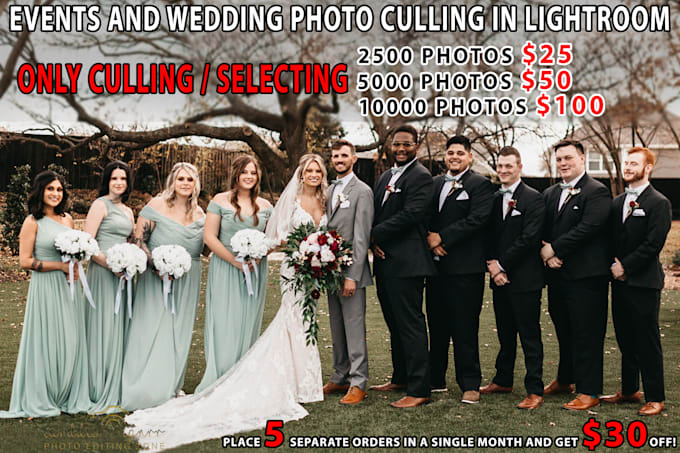
Wedding Photography Culling Outsourcing: Why Every Important Moment Deserves the Right Edit
A wedding day passes quickly, but the photographs created during those hours can preserve its memories for generations. From the bride getting ready to the groom waiting at the altar, from emotional family embraces to the final dance, every meaningful photograph contributes something to the story.
However, creating a beautiful wedding gallery involves much more than taking photographs. Professional photographers must review hundreds or thousands of images, select the strongest frames, maintain consistent colours and prepare the final collection for delivery.
This is where wedding photography culling outsourcing and wedding photography editing outsourcing can make a difference. By working with a professional editing partner, photographers can manage post-production more efficiently while retaining control over their creative style.
Let's explore why important wedding photographs deserve careful selection, how professional culling and editing work, and how outsourcing can support a photography business.
1. Why Are Wedding Photographs So Important?
Wedding photographs are not simply pictures of people wearing beautiful clothes. They preserve a significant personal event and the relationships surrounding it.
A wedding gallery should communicate what happened, who was present and how the day felt.
Preserving memories that cannot be recreated
A wedding ceremony happens once. A father's emotional expression, a mother's embrace, a groom's nervous smile or a bride's reaction during the vows cannot be reproduced in exactly the same way.
Photographs allow couples to revisit these moments long after the celebration has ended.
For this reason, photographers should consider more than technical perfection when selecting images. An imperfect but emotionally meaningful photograph may sometimes be more valuable than a technically flawless image without a compelling moment.
Documenting relationships and family connections
Wedding photographs also preserve relationships between people.
Important examples include:
Parents seeing their daughter or son in wedding attire.
Grandparents celebrating with younger family members.
Siblings sharing emotional moments.
Friends congratulating the newly married couple.
Children participating in the ceremony.
Family members who travelled long distances to attend.
These photographs may become especially meaningful as families grow and generations change.
Creating a visual story
A strong wedding gallery should have a beginning, middle and end.
The preparation, ceremony, portraits, family interactions, reception and celebration each contribute to the overall narrative.
If a photographer delivers only attractive portraits, the collection may fail to communicate the atmosphere and emotional journey of the wedding day.
The goal is not simply to deliver more photographs. It is to deliver the right photographs.
2. Which Wedding Photographs Should Never Be Overlooked?
Every wedding is different, and photographers should adapt their coverage to the couple, cultural traditions and event schedule.
However, several categories deserve particular attention.
Bride preparation and bridal portraits
The preparation period often contains intimate moments that are easy to overlook.
Examples include the bride putting on her dress, adjusting jewellery, receiving help from family members and sharing a final conversation before the ceremony.
Bridal portraits also preserve the details of the dress, makeup, hairstyle and personal styling.
Groom preparation and portraits
The groom's preparation deserves equal consideration.
Photographs of the groom getting dressed, adjusting his tie, meeting friends or sharing a moment with his parents help complete the wedding story.
Wedding ceremony and emotional reactions
The ceremony contains moments that cannot easily be repeated.
These may include the entrance, exchange of vows, ring exchange, first kiss, family reactions and the couple's expressions immediately after becoming married.
A professional culling process must consider these emotional moments rather than selecting photographs only by sharpness or exposure.
Family, friends and celebration
Group photographs, spontaneous conversations, speeches, dancing and candid interactions help document the wider experience.
A balanced gallery combines planned portraits with genuine moments.
3. What Is Wedding Photography Culling?
Wedding photography culling is the process of reviewing captured images and selecting the strongest photographs for editing and final delivery.
A photographer may capture several similar frames during a single moment. The challenge is deciding which frame communicates that moment most effectively.
Professional culling generally involves identifying:
Out-of-focus photographs.
Accidental camera movements.
Unflattering expressions.
Unnecessary duplicate frames.
Poorly timed compositions.
Strong emotional moments.
Important photographs that contribute to the story.
Adobe Lightroom Classic provides flags, star ratings and colour labels to help photographers organize and evaluate photographs. Its Assisted Culling functionality can also suggest potential selections and rejects, but creative review remains important.
Source: Adobe Lightroom Classic documentation.
Why professional judgment matters
Imagine a bride walking toward the ceremony.
A sequence may contain ten nearly identical photographs. One frame captures the best expression, another has better composition, and another shows a meaningful reaction from a family member.
Choosing the strongest photograph requires understanding the purpose of the image, not simply finding the sharpest frame.
This is why an effective culling workflow combines technical evaluation with storytelling judgment.
4. What Is Wedding Photography Editing?
After culling, selected photographs move into the editing process.
Professional wedding photo editing aims to create a consistent appearance across the complete gallery.
Common editing adjustments include:
Exposure and brightness correction.
White balance adjustments.
Colour correction and grading.
Contrast and highlight recovery.
Shadow adjustments.
Cropping and straightening.
Natural skin-tone consistency.
Selective retouching when required.
Why editing consistency matters
Consider a wedding gallery containing photographs captured in different lighting conditions.
The preparation room may have warm artificial lighting, the outdoor ceremony may have bright sunlight, and the reception may contain colourful stage lights.
Without a consistent editing approach, the final gallery can appear visually disconnected.
A professional editing workflow should respect the photographer's established style while making appropriate corrections for each photograph.
The objective is not to make every photograph identical. It is to create visual consistency without removing the natural atmosphere of the event.
5. Why Are Wedding Photographers Outsourcing Culling and Editing?
Photography businesses involve more than shooting weddings.
Photographers must communicate with clients, prepare equipment, manage bookings, organize files, market their services and deliver completed galleries.
Post-production can become a significant workload, particularly during busy wedding seasons.
Reducing the post-production backlog
A large collection of RAW files requires careful organization and review.
When multiple weddings arrive within a short period, photographers may struggle to complete every gallery while maintaining their other business responsibilities.
Wedding photography culling outsourcing allows photographers to delegate an important part of this workflow to an external editing team.
Creating more time for photography and clients
Delegating repetitive post-production tasks can provide more time for:
Client consultations.
Wedding bookings.
Marketing and business development.
Portfolio improvement.
Photography assignments.
Family and personal commitments.
The purpose of outsourcing is not to remove the photographer from the creative process. It is to make better use of their time.
Managing seasonal demand
Some photography studios experience significant fluctuations in workload.
Hiring permanent in-house editors may not be practical for every business.
Outsourcing can provide another way to manage changing project volumes without committing to a permanent internal editing team.
However, photographers should compare pricing, quality, communication and turnaround before choosing a provider.
6. How to Choose a Professional Wedding Photo Culling and Editing Company
Choosing an outsourcing partner requires more than comparing prices.
The company will handle photographs that represent the photographer's reputation and the couple's personal memories.
Consider the following factors.
Editing style compatibility
Ask whether the provider can follow your preferred editing style.
Share reference photographs, Lightroom presets where appropriate, and examples of your previous work.
A useful test is to provide a small sample gallery and compare the returned photographs with your expectations.
Culling accuracy
Ask how the editing team identifies duplicate photographs, important expressions, technical problems and meaningful moments.
A good provider should understand that culling is not just removing technically weak images.
Turnaround and communication
Confirm the expected delivery period before submitting a project.
Ask how urgent projects are handled, whether revisions are available and how the company communicates during production.
Do not choose a provider based only on an attractive delivery-time promise.
Privacy and file security
Wedding photographs are personal images.
Before outsourcing, understand how files are transferred, stored, accessed and deleted.
Review the provider's confidentiality practices, access controls and contractual terms. Obtain appropriate client permissions where required.
Sample editing and revision policy
A free or paid sample can help establish whether the provider understands your visual preferences.
Clarify how revisions work and what happens if the returned photographs do not match the agreed instructions.
7. How Professional Outsourcing Works
A well-organized outsourcing workflow should be straightforward.
Step 1: Prepare the photographs
Organize the wedding images and provide the agreed files, references and project instructions.
Step 2: Submit culling requirements
Explain your preferences regarding duplicate frames, expressions, family photographs, ceremony coverage and delivery selection.
Step 3: Complete the culling process
The editing team reviews the collection and selects the photographs according to the agreed criteria.
Step 4: Complete the editing
Selected photographs receive the requested colour, exposure and other adjustments.
Step 5: Review the returned gallery
The photographer checks important moments, editing consistency and any project-specific requirements.
Step 6: Deliver to the couple
After final approval, the photographer prepares the completed gallery for the client.
Adobe Lightroom Classic supports nondestructive editing, allowing photographers to preserve original photographs while managing editing adjustments through their workflow. Export settings also allow control over file format, colour space, dimensions and resolution.
8. Common Mistakes When Outsourcing Wedding Photo Editing
Outsourcing can improve workflow management, but poor planning can create additional problems.
Avoid these mistakes:
Choosing only the cheapest provider: A low price does not guarantee reliable selection, consistent editing or secure file handling.
Skipping sample tests: Never assume an editor understands your style without reviewing actual work.
Providing unclear instructions: Explain your preferred colour treatment, skin tones, cropping and culling requirements.
Ignoring important emotional moments: A selection process focused only on technical quality may remove meaningful photographs.
Failing to review the returned work: The photographer remains responsible for ensuring the final gallery meets client expectations.
Not protecting original files: Keep appropriate backups before transferring or processing photographs. Adobe specifically recommends maintaining independent backups of photographs and exported files, since Lightroom catalog backups alone do not back up the original images.
9. Wedding Photography Outsourcing for the USA, UK, Canada and Japan
Photographers in different countries may work with different cultural traditions, event structures and client expectations.
For example, an Indian wedding photographed in the UK may include multiple ceremonies and family traditions. A Japanese wedding may involve a different ceremony format and presentation style. North American weddings may include their own combinations of religious ceremonies, civil celebrations and reception traditions.
An outsourcing partner should follow the photographer's specific project instructions rather than assume that every wedding follows the same format.
For photographers in the USA, UK, Canada and Japan, useful selection criteria include:
Clear international communication.
Consistent image quality.
Agreed delivery deadlines.
Flexible project volumes.
Secure file-transfer procedures.
Editing that respects cultural and personal preferences.
Geographical location alone does not determine editing quality. A provider's workflow, communication and quality-control procedures matter more.
Conclusion: Preserve the Moments, Not Just the Photographs
Wedding photography is about preserving memories that couples and families may revisit for decades.
Every important photograph contributes something to that story: a parent's expression, a bride's smile, a groom's anticipation or a moment shared between family members.
Professional culling ensures that meaningful photographs are not lost among unnecessary duplicates. Consistent editing helps the complete gallery feel connected and thoughtfully presented.
For busy photographers, wedding photography culling outsourcing and wedding photography editing outsourcing can provide practical support when the right partner, instructions and quality-control process are in place.
If post-production is taking time away from your photography business, consider testing a professional editing service before committing to a complete workflow.
Need help with wedding photo culling or Lightroom editing?
Carddesignrr provides wedding photo editing support for photographers who need help managing their post-production workload.
Explore the services:
Fiverr Pro: https://pro.fiverr.com/s/50b5y67
Carddesignrr Fiverr profile: https://pro.fiverr.com/carddesignrr
Request a sample, explain your editing preferences and evaluate the results before placing a larger order.