Wedding Photography Culling Outsourcing

Wedding Photography Culling Outsourcing: How to Save Time Without Losing Your Creative Style Wedding photography is not finished when the last photograph is taken. After the celebration, photographers face another demanding task: reviewing hundreds or thousands of images, removing duplicates, checking focus, comparing expressions and selecting the photographs that best tell the couple’s story.
This process is called photo culling. It is essential, but it can become a major post-production burden—especially during busy wedding seasons.
That is why many professional photographers consider wedding photography culling outsourcing. By working with a reliable culling partner, photographers can reduce repetitive selection work while keeping control over their creative decisions and final galleries.
But outsourcing is not simply about sending files to someone else. The right process must protect image quality, consistency, privacy and the photographer’s signature style. This guide explains how to evaluate a service, prepare a wedding catalog and decide whether outsourcing is suitable for your studio.
What Is Wedding Photography Culling? Wedding photo culling is the process of reviewing a complete wedding photo collection and selecting the strongest images for editing and delivery.
A photographer may capture several frames of the same moment: a bride walking down the aisle, a couple exchanging rings, family portraits or guests celebrating. Some frames may be almost identical, while others may contain closed eyes, missed focus, distracting expressions or unwanted movement.
Culling helps identify the photographs that deserve to move to the editing stage.
A professional culling workflow commonly considers:
Technical quality: Is the subject sufficiently sharp and correctly exposed?
Expressions: Are the couple and guests showing natural, meaningful expressions?
Duplicate control: Does the selected image add something different from similar frames?
Composition: Is the framing balanced and visually effective?
Storytelling: Does the selection preserve the important moments and sequence of the wedding?
Coverage: Are important people, details and events represented?
Culling is different from editing. Culling determines which images should be kept; editing adjusts the appearance of the selected photographs through exposure, colour, white balance, contrast, cropping and other corrections.
Keeping these stages separate makes it easier to decide exactly what you want to outsource.
Why Wedding Photographers Outsource Photo Culling A wedding photographer needs time for more than post-production. Client communication, album planning, marketing, consultations, bookings and shooting all compete for attention.
When every wedding produces a large collection of RAW files, manually reviewing each image can delay the next stage of work.
- Reduce repetitive selection work Culling requires careful attention, but many decisions are repetitive. Photographers repeatedly compare similar frames, reject accidental shots and review technical problems.
An experienced culling partner can handle the agreed selection criteria, allowing the photographer to concentrate on creative review and final approval.
- Manage busy wedding seasons A photographer who shoots several weddings close together may have multiple galleries waiting for attention. Outsourcing can provide additional post-production capacity without immediately requiring a permanent in-house employee.
It is particularly useful when the workload changes throughout the year. A studio can request support for busy periods and reduce the workload when bookings become quieter.
- Improve workflow consistency A written culling brief can establish consistent selection rules across projects. For example, a photographer may specify how to treat group portraits, ceremony sequences, repeated poses and detail photographs.
Consistency does not mean every wedding should have an identical number of final images. Each event has its own story and coverage requirements.
- Focus on the creative and business side Outsourcing does not remove the photographer from the creative process. It changes where their attention is most valuable.
Instead of reviewing every duplicate frame, the photographer can spend more time checking the selected gallery, communicating with clients and planning the next project.
What Does a Professional Wedding Photo Culling Service Include? Not every provider offers the same service. Before ordering, check exactly what the provider will review, select and return.
A well-defined wedding culling service may include the following steps.
Duplicate and near-duplicate selection When photographers capture a sequence of similar images, the editor compares the frames and selects the strongest options. The goal is not simply to keep the first sharp image. A slightly later frame may have a better expression, composition or emotional impact.
Focus and expression review Images with missed focus, closed eyes or unflattering expressions may be rejected when stronger alternatives exist. Group photographs require particular care because one person's expression can affect the quality of the entire frame.
Storytelling and coverage A wedding gallery should communicate the event, not just contain technically acceptable photographs. The selection should preserve meaningful moments such as preparations, ceremony details, family interactions, portraits and reception highlights when those moments were captured.
Lightroom organization Ask how the selected images will be marked. Depending on the agreed workflow, a provider may use flags, star ratings, colour labels or an organized Lightroom catalog.
Adobe Lightroom Classic supports flags, ratings and labels for organizing selections. Its Assisted Culling features can also help identify potential issues such as eye sharpness and closed eyes, although photographers can review and override the suggested results.
Adobe Help Center +1
Delivery and review Before starting, agree on the expected output: a Lightroom catalog, selected image list, organized files or another format. Also confirm whether rejected images remain available for review or are removed from the delivered collection.
A clear delivery agreement prevents misunderstandings.
Outsourcing vs AI Culling vs In-House Culling There is no single method that works best for every wedding photography business. The right choice depends on image volume, budget, preferred control and the complexity of the assignment.
Method
Main advantage
Main limitation
In-house culling
Direct creative control
Requires the photographer's time
AI-assisted culling
Helps identify potential technical issues quickly
Results still need human review
Outsourced human culling
Adds selection capacity and another reviewer
Requires clear instructions and quality checks
Hybrid workflow
Combines automation with human judgment
Needs a well-organized process
AI-assisted tools can help photographers narrow down a large collection. However, technical sharpness is not the same as storytelling value. A technically imperfect frame may sometimes carry emotional significance, while a sharp image may be repetitive or poorly timed.
For this reason, a photographer should decide which decisions can be delegated and which must remain under personal review.
A hybrid workflow may be a practical option: use software to organize or identify potential rejects, let a culling partner review the agreed criteria, and complete a final creative check before editing or delivery.
How to Choose a Wedding Photography Culling Outsourcing Company Choosing the cheapest provider is not necessarily the best business decision. A poor selection can create more work if you must review the entire collection again.
Use the following checklist before committing to a service.
- Ask for a sample culling test A sample is one of the most useful ways to evaluate a provider. Send a small, representative set of photographs and explain your selection preferences.
Review whether the provider:
Removes genuine duplicates.
Keeps important expressions and emotional moments.
Preserves useful variations in a sequence.
Understands group photographs.
Follows your preferred selection range.
Do not judge only by how many photographs were rejected. Judge the quality of the photographs that were selected.
- Check Lightroom compatibility If your workflow depends on Lightroom Classic, confirm that the provider can return the work in a format that fits your process.
Ask whether flags, ratings or colour labels will be applied and whether the catalog can be opened and reviewed without disrupting your existing organization.
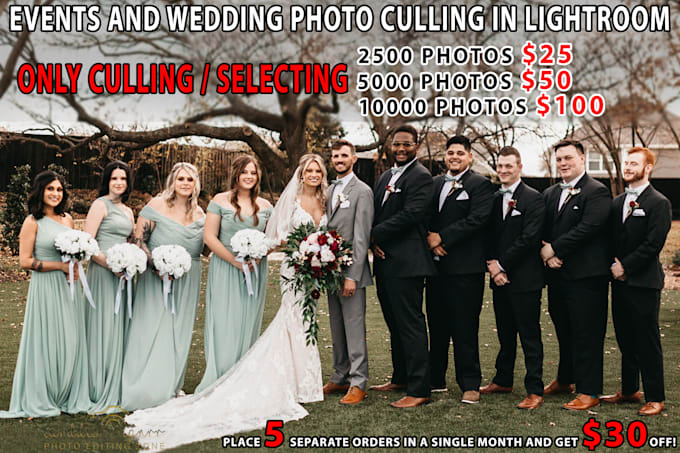
- Understand the pricing structure Culling providers may charge per submitted image, per selected image, per wedding or through a package. Some providers also set minimum project fees.
For example, published service pages show per-image rates as well as flat-fee wedding packages. These prices are provider-specific and should not be treated as a universal market rate.
LUXEDIT +2
When comparing quotes, ask:
Is the price based on all submitted photographs or only selected photographs?
Is there a minimum charge?
Are revisions included?
Is rush delivery available?
Does the price include editing, or culling only?
Compare the total cost for a typical wedding rather than relying on a low advertised starting price.
- Confirm turnaround expectations Ask for a realistic delivery estimate based on your image volume and the provider's current workload. A promised turnaround is only useful if it is achievable and clearly defined.
Clarify when the clock starts: after payment, after upload, or after the provider confirms that all files are received.
- Check communication and revision policies A good working relationship requires clear instructions and an easy way to resolve mistakes.
Ask who will handle your project, how you can provide feedback and what happens if the selection does not follow your brief. A provider should be willing to discuss the workflow before receiving a complete wedding catalog.
- Discuss privacy and file handling Wedding photographs can include private family moments and personal information. Before transferring files, ask how they are stored, who can access them, whether subcontractors are involved and when files are deleted.
Use a secure transfer method and agree on confidentiality expectations. Do not assume that every provider has the same privacy or data-retention practices.
How to Prepare Your Wedding Files for Outsourcing The quality of the result depends partly on the instructions you provide. A short, specific brief can prevent unnecessary revisions.
Before sending a project:
Organize the wedding files or Lightroom catalog.
Confirm that all required folders and image files are included.
Provide your target selection range, if you have one.
Explain how you want duplicates and similar frames handled.
Identify important moments or photographs that must not be overlooked.
Share examples of preferred and rejected images.
Explain how you want the selected photographs marked.
Confirm the delivery format and deadline.
Avoid instructions such as “choose the best photos” without explaining what best means for your business. One photographer may prefer documentary coverage with many candid moments; another may want a tighter, portrait-focused gallery.
Your provider needs to understand the difference.
Quality Control: What Should You Review Before Editing? Outsourcing should reduce repetitive work, not remove professional responsibility.
When the culled catalog returns, review the important parts before beginning full editing.
Check the ceremony, couple portraits, family groups, reception highlights and other essential moments. Look for missing sequences, accidental exclusions, repeated photographs and selections that do not match your visual preferences.
If you find a recurring issue, update your instructions rather than correcting the same problem on every project.
For example, if your provider consistently removes documentary photographs that you consider emotionally important, show specific examples and explain why those frames should be retained.
This feedback process helps create a more reliable working relationship over time.
Common Mistakes to Avoid When Outsourcing Culling Choosing only by price: A low price has little value if the selection creates additional review work.
Sending files without a brief: The provider cannot reliably follow preferences that have never been explained.
Expecting culling and editing to be included together: Confirm whether the package covers selection only or also colour correction and retouching.
Skipping the sample test: A small trial can reveal workflow problems before a full wedding is involved.
Ignoring privacy: Confirm file access, transfer security and retention arrangements.
Removing all final creative review: The photographer remains responsible for the gallery delivered under their brand.
Is Wedding Photography Culling Outsourcing Right for Your Studio? Outsourcing may be worth considering if your studio regularly handles large wedding collections, struggles with post-production backlogs or wants flexible support during peak season.
It may be less suitable if you enjoy reviewing every frame, have a very specific selection method that is difficult to explain, or do not yet have a consistent file-management process.
You do not need to outsource everything at once. Start with a small test, evaluate the returned selection and compare the time saved with the total cost and review effort.
The best arrangement is one that fits your workflow, protects your creative direction and makes the final gallery easier to complete.
Conclusion Wedding photography culling outsourcing can help photographers manage post-production workload without handing over complete creative control. The key is choosing a provider who understands your selection preferences, communicates clearly, respects file privacy and returns work in a format that fits your Lightroom workflow.
Start with a sample project, define your culling rules and review the results carefully. Once the process is reliable, outsourcing can become a flexible part of your wedding photography business—giving you more room to focus on clients, creative work and future bookings.
If you are considering a culling partner, Carddesignrr offers wedding photo culling and editing support for photographers. You can review the service details and discuss your project before placing an order.
- FAQ Section What is wedding photography culling outsourcing? It is the process of hiring an external editor or specialist team to review wedding photographs and select the strongest images based on agreed technical and creative criteria.
Is wedding photo culling the same as photo editing? No. Culling selects which photographs should be kept. Editing adjusts the appearance of selected images through colour correction, exposure, white balance, cropping and other adjustments.
Can I outsource only wedding photo culling? Yes. Some providers offer culling as a standalone service, while others combine it with Lightroom editing or retouching. Confirm the exact package before ordering.
LUXEDIT +1
Can an outsourced editor work with my Lightroom catalog? Many providers support Lightroom-based workflows, but compatibility and delivery formats vary. Ask whether the provider returns a Lightroom catalog with flags, ratings or labels applied.
Is AI culling better than human culling? Neither is automatically better for every project. AI tools can help identify technical issues, while a human reviewer can assess context, expressions and storytelling. A hybrid workflow may combine both approaches.
How much does wedding photo culling outsourcing cost? Pricing depends on the number of submitted images, pricing model, turnaround, minimum fees and included services. Compare complete project quotes rather than assuming that one advertised per-image price represents the total cost.
How can I protect my wedding photographs when outsourcing? Use a secure file-transfer method, agree on confidentiality, ask who can access the files and confirm the provider's storage and deletion practices.
Should I outsource culling during wedding season?
It may help when several weddings create a post-production backlog. Test the provider with a small project first and confirm that the delivery schedule fits your client commitments.












Comments
Post a Comment